CANVAS



PREVIOUS ARTIST STATEMENTS:
THE DEPTHS WE CARRY -- This work explores what women absorb in silence — survival, suppression, and the unraveling of carefully maintained facades. Each painting depicts a single woman's face suspended just above water, caught between submersion and survival. The titles — Overwhelmed, Engulfed, Devoured, Consumed — name emotions women are too often expected to carry without acknowledgment. Flowers drift across the water's surface around each face. In my previous series, The Beauty That Is Left, florals obscured the women entirely — a metaphor for the masks we wear. Here, they've fallen away, floating indifferently at the periphery. The palette is deliberately contradictory: hot pinks, bright oranges, peachy corals. Color functions as its own form of masking — the eye is drawn in by beauty before registering the weight of what it witnesses. Joy and suffering in the same visual space is precisely the contradiction women are asked to perform every day. Each painting is framed in transparent yellow acrylic that contains and sometimes deliberately off-centers each face. When light passes through it, the frame casts warm color onto the wall. Even the shadow of her containment is beautiful — and that's the trap. The Depths We Carry is the rawer evolution of my practice: the mask has slipped, and what remains is more honest.
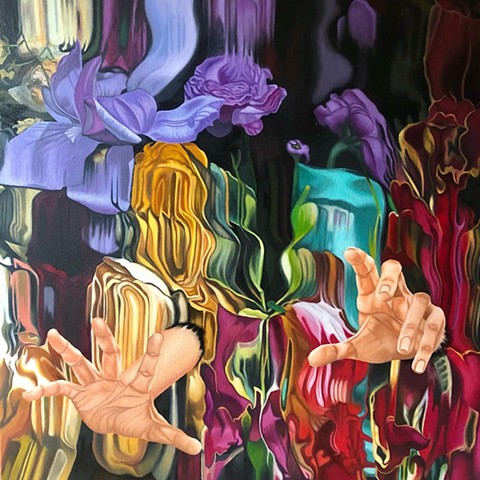
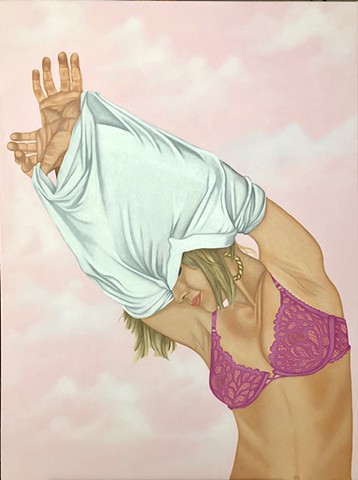
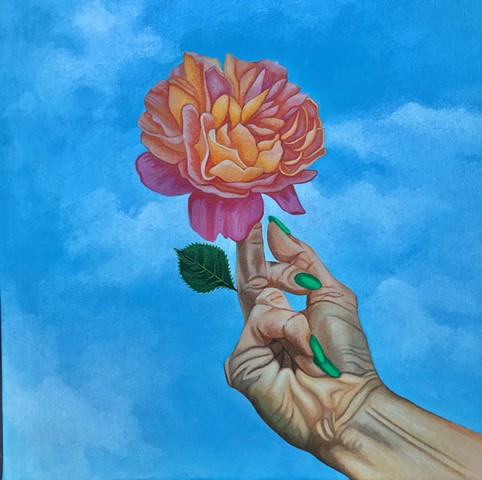
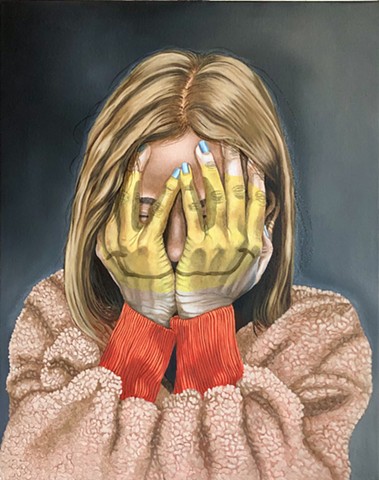
THE BEAUTY THAT IS LEFT -- Time after time, I keep learning that optimism is the right response to the human condition. I have to keep learning this again and again because despair is an incredibly powerful force in our lives as women. It's like a never-ending joker card dealt to us, where our physical bodies often determine our experience. It’s every gas stop when I roll up on my motorcycle and am asked how it’s possible I have the strength to hold it up. It’s the exclusion I feel when I’m childless in a group of mothers. It’s the desperation when trying to convince my male doctor to “Please believe me.” They are both motivation to move forward and death by a thousand cuts…We live in a paradox of being joyful while also deeply sad—optimism and despair exist simultaneously, like salt and pepper—both options always on the table, each of us with a choice. Most times, they go together, and beauty can stem from tragedy. Having raw emotions forces us to gain new perspectives. The beauty that is left are these lessons. This work examines what happens when we acknowledge both the weight of despair and the possibility of joy. Through the use of the female form and floral imagery, I’m exploring how women in particular must navigate a cultural landscape that simultaneously celebrates and dismisses our emotional experiences. Any woman can look at this work and undoubtedly think "That could be me" because we have all wanted to hide from our reality. We have all felt compelled to pretend everything is fine when it is not. By omitting the facial expressions, the viewer is instead pressed to examine the body language, asking themselves what story do her gestures suggest? Immortalized in glowing hues, I chose to paint my close friends and family for most of the portraits. These are the women who radiate support for so many of my life decisions, even when they might not have the bandwidth to address their own. We often find ourselves saying “I love women!” after hanging out because of how luminous we feel. Flowers, traditionally associated with beauty, delicacy, and impermanence, function as both celebration and concealment in this work. They are simultaneously a distraction and a veil to mask our true feelings. Rene Magritte said, “Everything we see hides another thing, we always want to see what is hidden by what we see. There is an interest in that which is hidden and what we can see, which can take on an intense feeling, a conflict.” The beauty that is left is the knowing that simply being a woman is a conflict. This exhibition continues my commitment to amplifying women's experiences and creating spaces where female perspectives are centered rather than marginalized. Through a post-optimism aesthetic, I’m suggesting that acknowledging the full spectrum of our emotional responses—from grief to hope—might be our most honest path forward. The beauty that is left is the hope in candid moments. It is our female friendships. The beauty that is left are the women themselves.
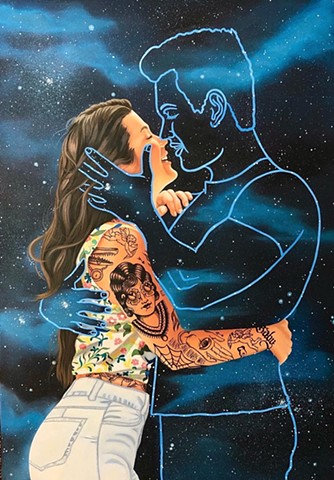
ELASTIC HEART -- ‘Elastic Heart’ refers to the endurance of looking for love. Specifically, it is about the pain that comes from a bad relationship; It’s about finding love after heartbreak; It’s about not giving up on wanting love; It’s about learning to love yourself again.
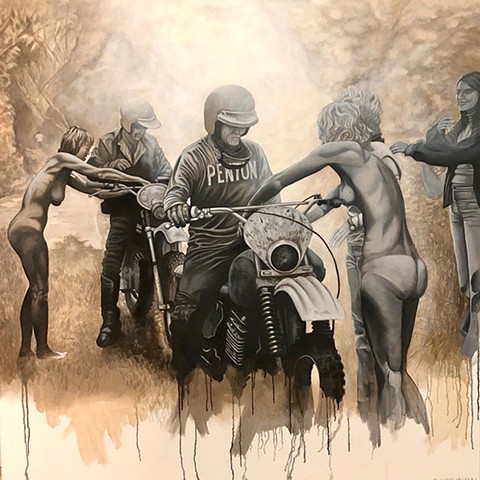
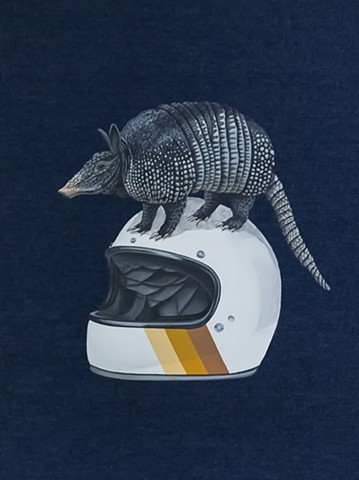
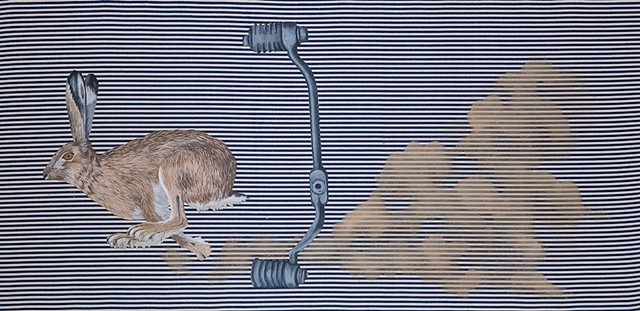
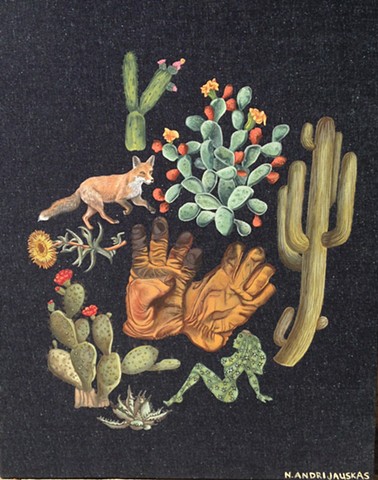
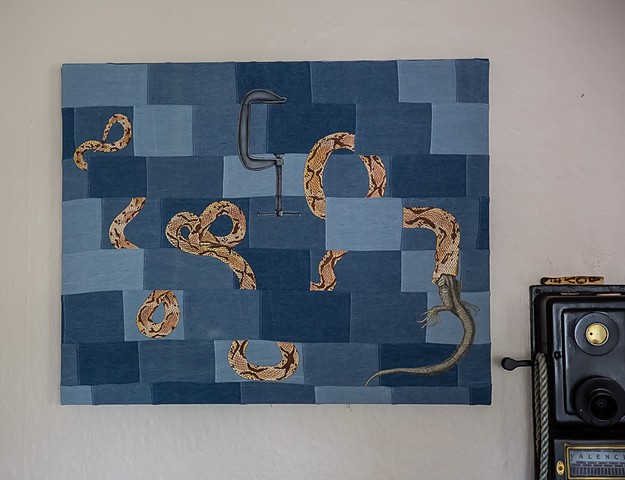
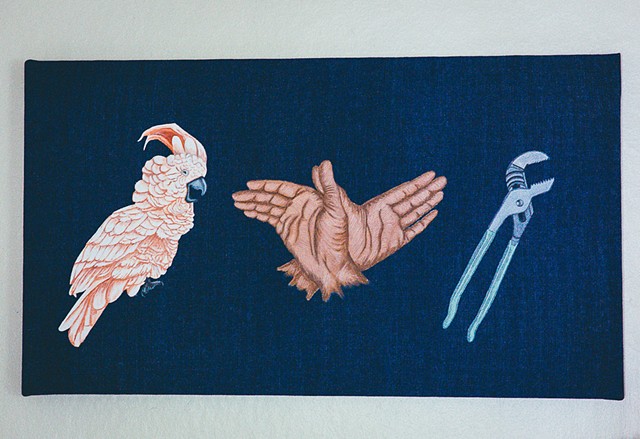
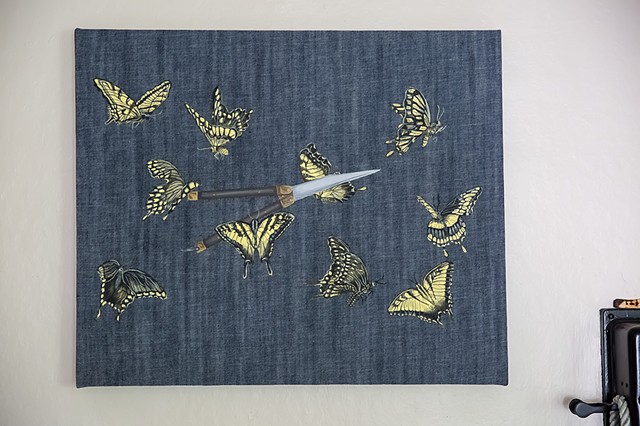
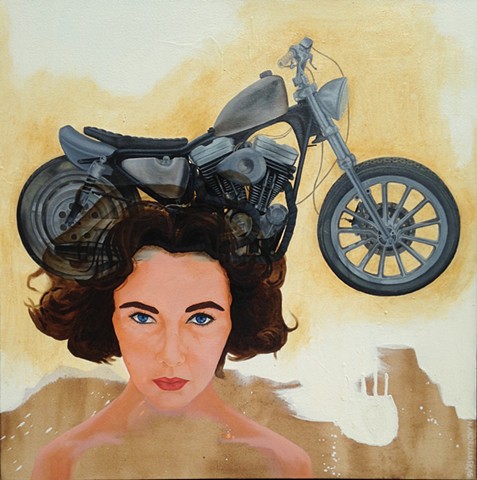
SUPPLY & DENIM -- Animals are equipped with distinct features designed to help them survive the wilderness--feathers, exoskeletons, beaks, water retention. We use tools instead. I have no armour, but wear a helmet. I don't bear hind legs that propel me 10 feet into the air, yet I straddle a machine horse with no legs. We adapt. In designing instruments to compliment our nearly powerless form, we flourish. Animals are pure in design, but live fast and short. We are more complex, but have gained valuable lessons through watching the desert species develop. The beauty that exists in the resemblances of these natural and artificial worlds are married here.
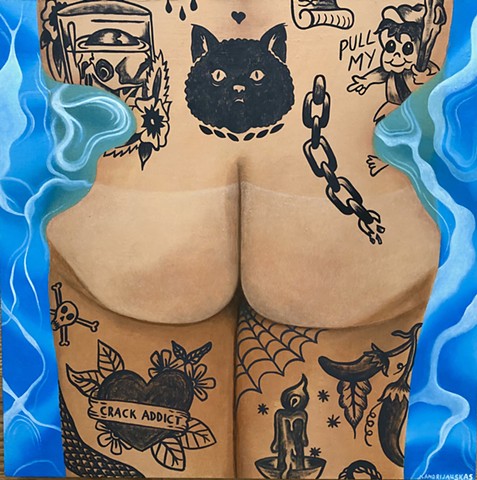
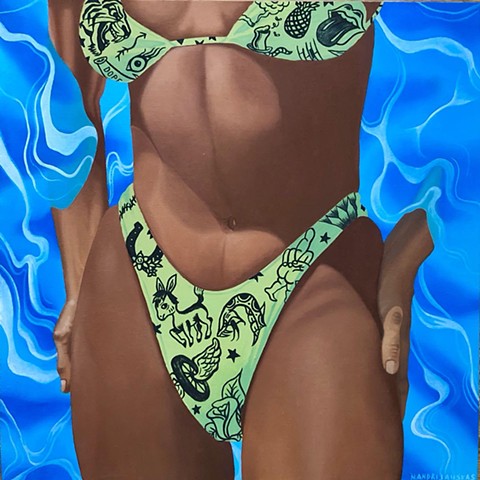
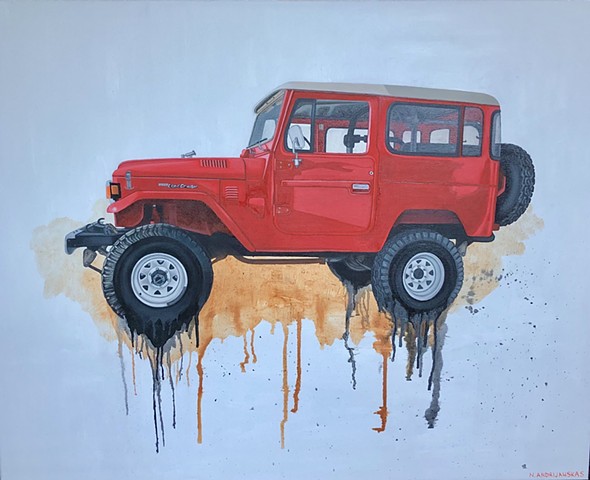
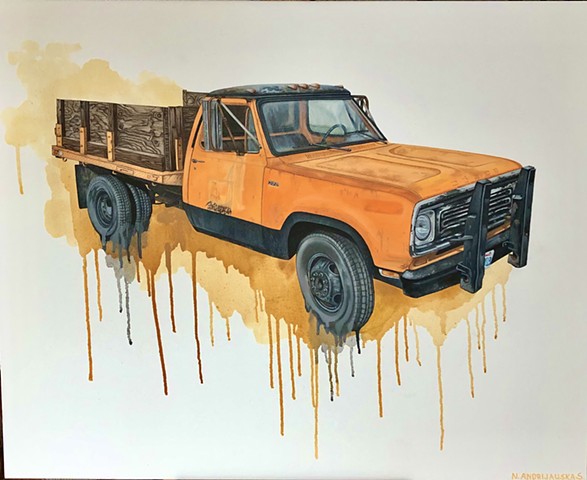
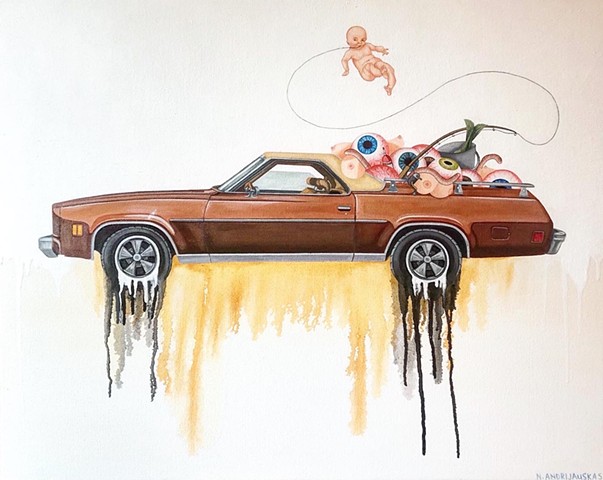
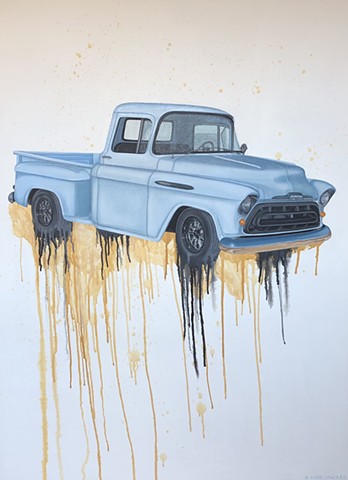
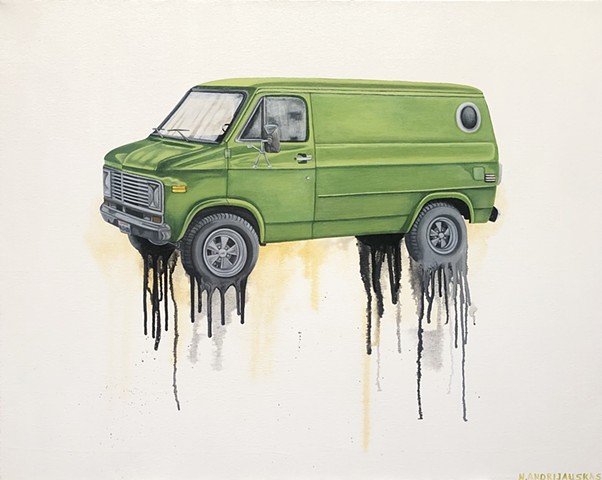
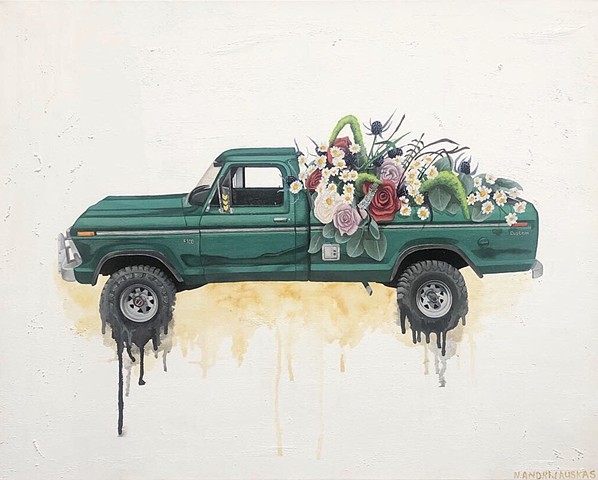
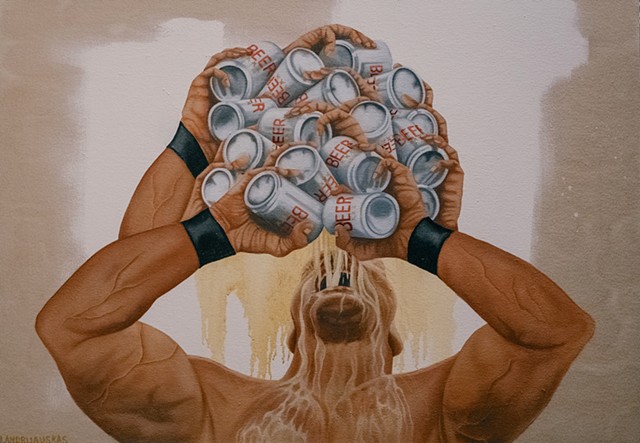
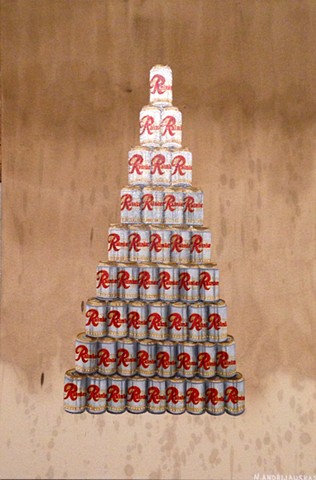
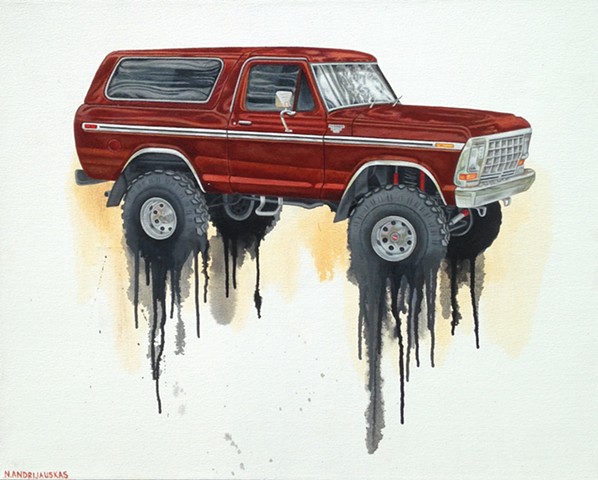
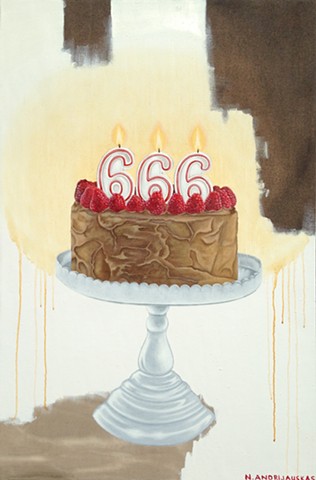
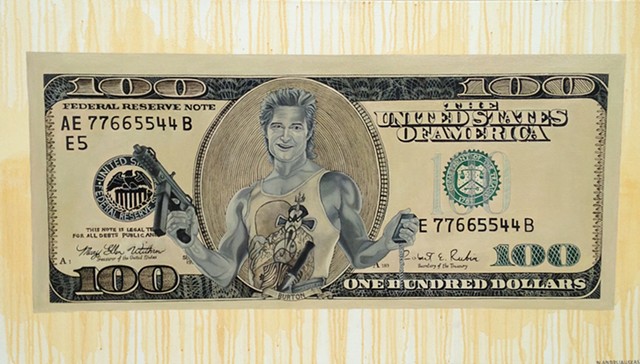
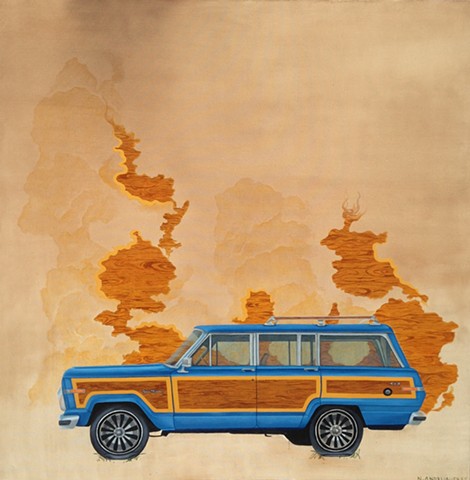
BAD ASSPIRATIONS -- The 1970s produced a wide range of car styles, sometimes boxy in design, conveying a casual nod to utilitarians in an era of cool before minivans and SUVs. The Bronco, El Camino, and Grand Wagoner, for example, have all oozed their Americana on history. Their forms, along with motorcycles and tools, are represented in my work to recollect a modest toughness, a kind of bad ass. Pairing machines with subjects of femininity, or substituting righteous beliefs with mockery, are approaches I've taken to debunk what it means to be "cool". Impulsivity, and it's effects, play an important role as it reflects activities we do that feel good but aren't necessarily good for us. I like to think of this notion as bad aspirations. The double entendre alludes to a lack of ambition, while simultaneously telling a story of instant gratification and glory. It suggests a deficit of integrity and no fortitude for enduring goals. It's an ironic rebellion in a pop culture obsessed world. Twisted wit is now mainstream and everyone is satirical. It's unprofound and comforting at once. It's a culture of cool where everyone is a member.